













Kaabo Urban vs Segway Ninebot Max G2 vs Apollo Air: Which City Scooter Is Worth Your Money?

Choosing a commuter scooter in the $700–$900 range is harder than it looks. Three models dominate this bracket right now: the Kaabo Urban, the Segway Ninebot Max G2, and the Apollo Air. All three claim to be built for city streets, and all three are priced within $100 of each other. But they are very different machines — and one delivers significantly more value for urban riders than the other two.
The Kaabo Urban sits at $799 and packs a 500W motor, NFC smart unlock, six ride modes, and 120mm disc brakes with EABS into a 44-pound frame. It reaches 25 mph and covers up to 25 miles per charge. Those numbers put it squarely against the Segway Ninebot Max G2 ($899) and the Apollo Air ($899), both popular choices among city commuters.
This article compares all three scooters across speed, range, braking, portability, and everyday usability. By the end, you will know exactly which one earns its price tag — and which ones ask more than they deliver.
Quick Answer: The Kaabo Urban outperforms the Segway Ninebot Max G2 and Apollo Air for urban riders who prioritize speed, safety, and smart features. With a 500W motor, 25 mph top speed, NFC unlock, EABS braking, and six ride modes at just $799, the Kaabo Urban delivers more performance per dollar than either competitor in the sub-$900 category.
Kaabo Urban vs Segway Ninebot Max G2: Speed and Performance Head-to-Head
The Segway Ninebot Max G2 runs a 450W motor with a peak burst of 1,000W. It tops out at 20 mph — five mph slower than the Kaabo Urban's 25 mph. For a scooter priced $100 higher at $899, that gap is hard to justify.
The Kaabo Urban's motor delivers consistent 500W output across all six ride modes. In Sport mode, acceleration from 0 to top speed is noticeably crisper. The Max G2 relies on its peak burst for uphill climbs but throttles back on longer rides to conserve battery, which creates uneven power delivery over mixed urban terrain.
Hill Climbing
The Kaabo Urban handles inclines up to 20 degrees without a noticeable drop in speed. The Max G2 performs similarly on steep grades, but its base 450W motor works harder to sustain that effort, which accelerates battery drain on hilly routes. On flat city streets and moderate inclines, the Kaabo Urban holds its speed more consistently.
The Apollo Air handles up to a 15% grade — a slight disadvantage compared to both the Kaabo Urban and the Max G2 on the steeper streets found in many U.S. cities.
Ride Modes
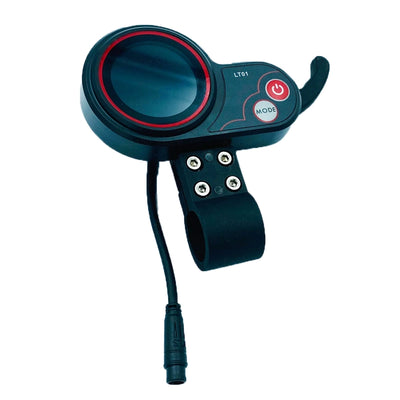
Six ride modes — from Eco to Sport — give the Kaabo Urban flexibility that neither competitor matches. The Segway Max G2 offers three modes. The Apollo Air offers three as well. More modes means finer control over speed, battery use, and ride feel across changing conditions. That matters on longer commutes where traffic, terrain, and weather shift throughout the day.
Range Comparison: Which Scooter Goes the Distance?
The Segway Ninebot Max G2 claims the longest stated range at over 30 miles per charge. That is a legitimate edge for riders with longer routes. But that range comes at a cost: the Max G2 weighs 54 pounds — ten pounds heavier than the Kaabo Urban. For anyone carrying their scooter up stairs, onto trains, or through lobbies, that weight difference is felt every single day.
The Kaabo Urban delivers up to 25 miles from its 48V 10.4Ah lithium-ion battery. According to U.S. Census Bureau commuting data, the average one-way urban commute is under 10 miles. That means the Kaabo Urban covers a full round trip for most city riders with significant reserve remaining.
The Apollo Air advertises up to 31 miles in eco mode, but real-world testing by Rider Guide puts actual commuter range closer to 20–22 miles at normal riding speeds. The Kaabo Urban's 25-mile rating is conservative and holds up more accurately in mixed riding conditions.
Battery and Charging
All three scooters use lithium-ion battery packs and charge via standard wall outlets. The Kaabo Urban reaches a full charge in approximately 5–6 hours. The Max G2 takes around 6 hours. Charge times are comparable across the group, so this is not a differentiator — but the Kaabo Urban's battery-to-weight ratio edges out both competitors.
Braking and Safety: Where the Kaabo Urban Pulls Ahead
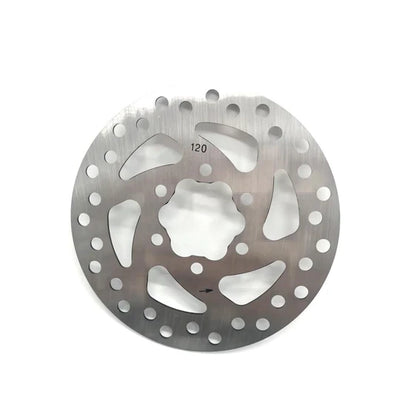
Safety is where the Kaabo Urban most clearly separates itself from the competition. It runs 120mm disc brakes combined with EABS (Electronic Anti-lock Braking System) — a combination typically found on scooters priced $200–$400 higher in the market.
EABS modulates braking force at the motor level before the disc brake fully engages. The result is shorter stopping distances on wet pavement and fewer skid incidents during emergency stops. In cities where pedestrians, car doors, and cyclists create sudden stopping scenarios daily, this system is a genuine safety advantage.
The Segway Ninebot Max G2 uses a rear drum brake with regenerative braking. Drum brakes are reliable but require more lever pressure and offer less modulation than disc systems. The Apollo Air uses a rear drum brake combined with a front e-brake — a step above the Max G2 in responsiveness, but still below the Kaabo Urban's disc-plus-EABS setup.
Full Spec Comparison: Kaabo Urban vs Segway Ninebot Max G2 vs Apollo Air
| Spec | Kaabo Urban | Segway Ninebot Max G2 | Apollo Air |
|---|---|---|---|
| Motor | 500W | 450W (1,000W peak) | 500W |
| Top Speed | 25 mph | 20 mph | 21 mph |
| Range | 25 miles | 30+ miles | 31 miles (eco) |
| Weight | 44 lbs | 54 lbs | 41 lbs |
| Brakes | 120mm Disc + EABS | Rear Drum + Regen | Rear Drum + E-brake |
| Tires | 8.5" vacuum | 10" pneumatic | 10" pneumatic |
| Ride Modes | 6 | 3 | 3 |
| Hill Climb | 20° | ~20° | 15% grade |
| Smart Unlock | NFC | App (Bluetooth) | App (Bluetooth) |
| Price | $799 | $899 | $899 |
Portability and Build Quality for City Use
At 44 pounds, the Kaabo Urban sits between the two competitors. The Apollo Air is the lightest at 41 pounds, and the Max G2 is the heaviest at 54 pounds. All three fold for storage. The Apollo Air's three-pound weight advantage over the Kaabo Urban is real — but it is not large enough to override the braking and speed differences on a daily-use scooter.
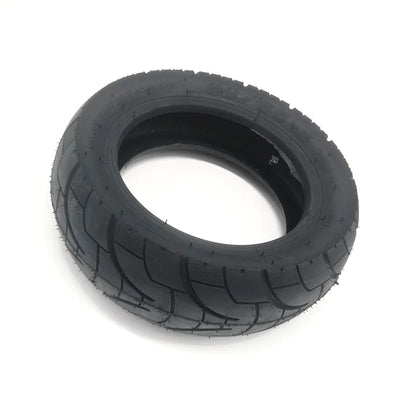
The Kaabo Urban's 8.5-inch vacuum tires resist punctures better than traditional pneumatic tires. That is a practical daily advantage on city streets covered in glass, gravel, and debris. The Max G2 and Apollo Air both run 10-inch pneumatic tires, which offer better vibration absorption but are vulnerable to flats — and a flat tire mid-commute is one of the most common frustrations electric scooter riders report.
NFC Smart Unlock
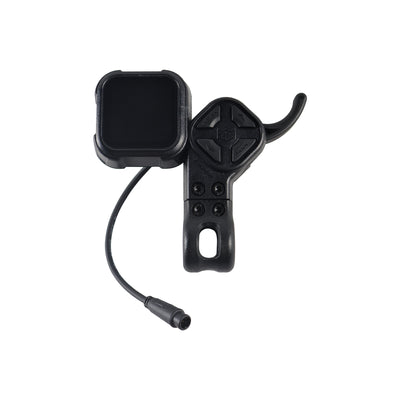
The Kaabo Urban includes NFC (Near Field Communication) unlock as a standard feature. You lock and unlock the scooter with a tap of your phone or NFC card. Neither the Max G2 nor the Apollo Air includes NFC. Both rely on Bluetooth app connections for locking, which requires your phone to be active and the app to connect before you can ride. NFC unlock is a small detail with a significant quality-of-life impact over hundreds of commuting days.
Who Should Buy Each Scooter?
The Kaabo Urban is the right choice for riders who want the highest top speed, the best braking system, NFC convenience, and the most ride modes in the sub-$900 category. Its 500W motor, EABS braking, and vacuum tires are purpose-built for urban environments. At $799, it also costs $100 less than either competitor.
The Segway Ninebot Max G2 makes more sense for riders with commutes exceeding 25 miles round-trip who do not mind the extra weight. It is dependable with strong Segway brand support, but it costs more, tops out 5 mph slower, and gives up the superior braking system.
The Apollo Air suits lighter riders who prefer 10-inch tires for smoother rides on rough pavement and are comfortable with 41 pounds of carry weight. At $899, however, its value argument against the Kaabo Urban is difficult to make on the specs alone.
If you are still deciding where the Kaabo Urban fits within the broader lineup, the Kaabo scooters beginner's guide walks through each model's strengths by riding style. For riders who want to understand how the Urban stacks up in pure performance terms, the fastest electric scooters in 2025 provides useful context across the full market.
Frequently Asked Questions
Is the Kaabo Urban faster than the Segway Ninebot Max G2?
Yes. The Kaabo Urban reaches 25 mph compared to the Segway Ninebot Max G2's top speed of 20 mph. Despite the Max G2's 1,000W peak output, it cannot sustain the Kaabo Urban's consistent top-end speed. For urban commuters where speed and time savings matter, the Kaabo Urban is the faster machine at the lower price.
How does the Kaabo Urban's range compare to the Apollo Air in real-world conditions?
The Kaabo Urban delivers up to 25 miles in real mixed riding. The Apollo Air claims up to 31 miles but real-world testing consistently shows 20–22 miles at typical commuting speeds. The Kaabo Urban's range rating is more conservative and more accurate, making it the more reliable choice for range planning on daily commutes.
Does the Kaabo Urban have better brakes than the Segway Ninebot Max G2?
Yes. The Kaabo Urban uses 120mm disc brakes with EABS — a dual braking system that modulates motor resistance and mechanical stopping force simultaneously. The Segway Ninebot Max G2 uses a rear drum brake with regenerative braking, which provides less stopping precision and longer distances in wet conditions compared to a disc-plus-EABS setup.
Is the Kaabo Urban worth $799 compared to its competitors?
At $799, the Kaabo Urban delivers a 500W motor, 25 mph top speed, NFC unlock, EABS disc braking, six ride modes, and puncture-resistant vacuum tires. The Segway Max G2 and Apollo Air are both priced at $899 and offer fewer ride modes, slower speeds, and inferior braking systems. For urban riders, the Kaabo Urban offers stronger value across the specs that matter most in daily city use.
What tires does the Kaabo Urban use, and why does it matter?
The Kaabo Urban runs 8.5-inch vacuum tires, which are self-sealing and highly resistant to punctures caused by road debris. The Segway Max G2 and Apollo Air both use pneumatic (air-filled) tires, which absorb vibration better but are susceptible to flats. For city riding where broken glass, gravel, and debris are constant hazards, vacuum tires offer more reliable day-to-day durability.
Can the Kaabo Urban handle steep city hills?
Yes. The Kaabo Urban climbs inclines up to 20 degrees, which covers the steepest gradients found in most U.S. urban environments. Its 500W motor sustains speed consistently on climbs. The Apollo Air is rated for up to a 15% grade, which may result in noticeable speed loss on steeper city streets.
The Kaabo Urban Wins Where It Matters for City Riders
Speed, braking safety, and smart features are the three pillars of daily urban riding. The Kaabo Urban leads on all three within the sub-$900 price bracket. The Segway Ninebot Max G2 has a range advantage, but gives up 5 mph, costs more, and weighs ten pounds more. The Apollo Air is slightly lighter, but its braking system and price do not match what the Kaabo Urban delivers for the same riding context.
For commuters navigating real cities — with traffic intersections, wet pavement, stop-and-go conditions, and storage constraints — the Kaabo Urban is built around exactly those conditions. Its EABS braking, NFC unlock, and six-mode riding system make it the most capable daily driver in this price class.
Explore full specs and order directly on the Kaabo Urban product page.

 https://www.facebook.com/KaaboUSA/


