













How to Fix Common Electric Scooter Problems

Electric scooter problems strike at the worst times — mid-commute, on a trail, or right before an important ride. Most issues boil down to a handful of root causes: battery faults, brake wear, motor connections, throttle failures, and flat tires. Understanding these patterns means you can fix common electric scooter problems fast, without waiting days for a shop appointment. This guide walks through each problem with a direct diagnosis method, a step-by-step fix, and clear signals for when you need professional help.
Quick Answer: The most common electric scooter problems are a dead battery, flat tires, sticky brakes, unresponsive throttle, and display error codes. Most can be fixed at home in under an hour by checking connections, adjusting cables, or replacing worn parts using basic tools. Battery swelling or motor faults require professional service.
Why Electric Scooter Problems Happen
Electric scooters fail for predictable reasons. Vibration loosens connectors. Moisture corrodes contacts. Brake pads wear down after 200–500 miles depending on rider weight and terrain. Lithium-ion battery cells degrade after roughly 300–500 charge cycles — typically two to four years of regular use. A poorly tensioned brake cable can mimic a motor problem by keeping the brake sensor engaged, cutting power entirely.
Most riders don't realize how many "electrical" issues are actually mechanical. A loose stem bolt creates handlbar play that feels like a steering problem. A slipping folding latch adds vibration that looks like wheel wobble. Diagnose from the outside in — check the physical before you open the electronics.
The 5-Minute First-Check Routine
Before assuming a major fault, run this quick check every time your scooter acts up: press the power button for two full seconds (not a tap), check that the battery percentage is above 20%, inspect the charging port for bent pins or debris, and look at the display for any error code. Clear roughly 40% of reported "problems" come back to the scooter being in a locked mode or needing a reset. Hold the power button for five seconds to perform a soft reset on most models.
How to Fix Electric Scooter Battery Problems
Battery issues are the most common reason an electric scooter stops working. A scooter battery showing 20% charge on the display can still lack enough voltage to power the motor — the display reads cell voltage, not usable power reserves.
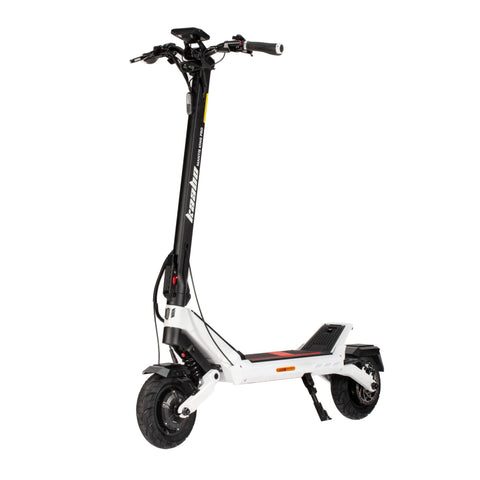
Start with the charger. Plug it into a wall outlet and check that the indicator light turns red (charging) or green (full). If the light stays off, try a different outlet. A charger that shows no light at all is likely faulty, not the battery. Original chargers for 48V systems like the Kaabo Mantis X Plus output 54.6V — a cheap third-party charger outputting lower voltage will never fully charge the pack.
Signs Your Battery Needs Replacing
Range that drops below 50% of the original spec, a battery pack that gets warm during a short ride, and cells that swell or bulge visually are all signs of degradation. Do not ride a scooter with a swollen battery pack. Lithium-ion thermal runaway is rare but serious. The U.S. Consumer Product Safety Commission has flagged micromobility fires linked to damaged or non-certified battery packs.
For cold weather rides, battery capacity drops by 20–30% below 40°F. Check Kaabo's battery tips for cold weather for a deeper breakdown on protecting range in winter.
How to Fix Electric Scooter Brake Problems
Brake problems split into two types: mechanical (pads, rotors, cables) and electronic (brake sensor cutting motor power). Both are fixable at home.
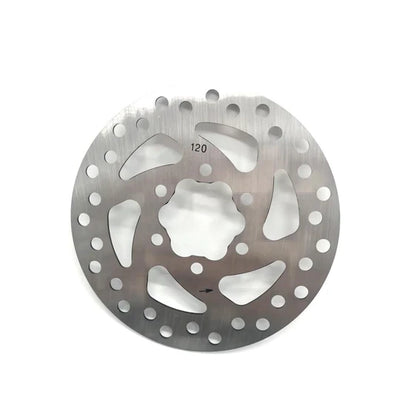
Mechanical disc brakes make a grinding or squealing sound when pads wear thin. Pad thickness below 1.5mm means replacement. To adjust a disc brake caliper, loosen the two mounting bolts, squeeze the lever to center the caliper over the rotor, and retighten. This takes about ten minutes and fixes rubbing brakes without replacing any parts.
Cable tension is the next check. A loose cable makes the lever feel spongy and reduces braking force. Turn the barrel adjuster counterclockwise (out) by one or two full rotations to tighten cable tension. Test the lever — it should feel firm and engage the brake before reaching the handlebar.
When the Brake Sensor Cuts Motor Power
Many electric scooters use a normally-open brake switch: when you squeeze the lever, it signals the controller to cut motor power. If this switch sticks closed, the scooter thinks you're always braking and the motor won't engage. Disconnect the brake sensor connector from the controller and test if the motor runs. If it does, the sensor or lever assembly needs replacement. You can find compatible brake parts for Kaabo scooters on the official parts page.
Electric Scooter Won't Turn On — Step-by-Step Fix
A scooter that won't power on is one of the most reported electric scooter problems, and the fix is usually simpler than riders expect.
Follow this sequence in order:
- Check battery level. Plug in the charger. If the charger light is red, the battery was simply drained. Charge for 30 minutes and retry.
- Inspect the charging port. Bent pins or moisture inside the port prevents charging. Gently straighten bent pins with a thin tool. Dry the port with compressed air if wet.
- Look for a blown fuse. Most scooters have a 30A automotive fuse near the battery or under the deck. A black or broken fuse wire means replacement — a $2 fix at any auto parts store.
- Check the key switch or NFC lock. Kaabo models with NFC displays require the NFC card to unlock before powering on. Missing this step looks identical to a dead battery.
- Perform a factory reset. On most models, hold power + throttle simultaneously for five seconds. Consult your model's user guide at the Kaabo after-sale service page for exact steps.
If none of these steps work, the controller or BMS (battery management system) may have tripped a protection mode. This requires a multimeter to diagnose properly.
Throttle Not Responding — How to Diagnose and Fix It
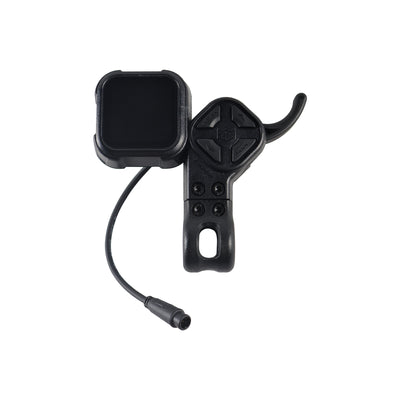
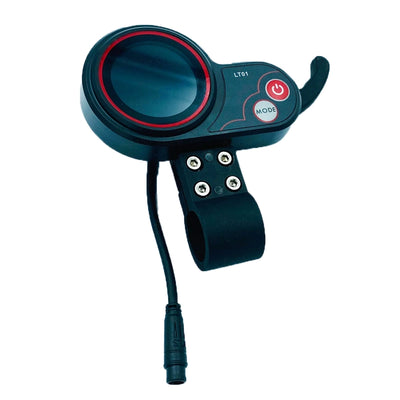
A throttle that does nothing — or responds erratically — points to three likely causes: a loose connector, water intrusion, or a faulty controller.
Loose connector: The throttle signal wire plugs into the controller with a small 3-pin or 4-pin JST connector. Vibration works these loose over time. Power off the scooter, locate the throttle cable running from the handlebar to the controller box under the deck, and firmly push in the connector until you hear a click.
Water intrusion: Water damage to the throttle assembly causes short circuits and triggers false readings — in wet climates, this accounts for an estimated 40–50% of throttle failures. If you rode in rain, let the scooter dry completely for 24 hours before powering on. Spray electrical contact cleaner into the throttle connector, let it dry, and reconnect.
Controller fault: If the throttle tests normal voltage (4.3V at full twist, dropping to ~1V at rest using a multimeter) but the scooter still won't accelerate, the controller is the likely culprit. Controller replacement is a moderate DIY repair — compatible controllers are listed in the Kaabo parts collection by model.
Tire Punctures and How to Fix Them
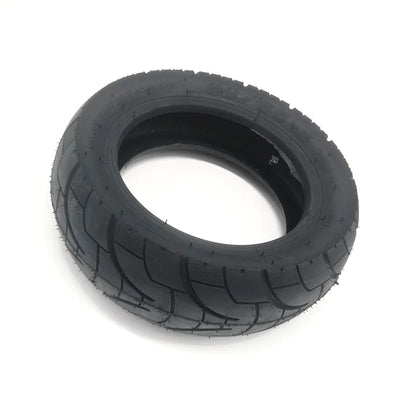
Flat tires are a near-universal electric scooter problem, especially on models with pneumatic (air-filled) tires. The fix depends on whether your scooter uses inner tubes or tubeless tires.
Tubed tires: Remove the wheel, deflate fully, separate the tire bead from the rim using tire levers, pull out the tube, inflate it slightly to find the hole, patch with a standard bicycle patch kit, reassemble, and inflate to the rated PSI printed on the tire sidewall. Most 10-inch scooter tires run at 35–45 PSI.
Tubeless tires: Inject tire sealant directly through the valve stem. This works for punctures under 6mm. Larger holes require a plug kit or full tire replacement.
Solid tires eliminate flats entirely but ride harsher. Models like the Kaabo Warrior X Max are designed around specific tire specs — always match the replacement to the original size printed on the sidewall.
| Problem | Likely Cause | Fix | DIY Difficulty |
|---|---|---|---|
| Scooter won't turn on | Dead battery, blown fuse, NFC lock | Charge, check fuse, tap NFC card | Easy |
| Short range | Battery aging, cold weather, tire pressure | Charge fully, warm battery, inflate tires | Easy |
| Brakes grind or squeal | Worn pads, misaligned caliper | Replace pads, realign caliper | Easy–Moderate |
| Throttle unresponsive | Loose connector, water damage | Reseat connector, dry, clean contacts | Moderate |
| Motor stutters | Faulty controller, loose phase wire | Check wiring, test controller | Hard |
| Flat tire (tubed) | Puncture | Patch or replace tube | Easy–Moderate |
| Display error code | Sensor fault, motor fault | Check manual, reset scooter | Moderate |
| Scooter turns on but won't move | Brake sensor stuck closed | Disconnect sensor to test, replace switch | Moderate |
When to Stop DIY Repairs
Some electric scooter problems need a trained technician. Stop DIY work and contact support if you see any of the following: battery pack is visibly swollen or leaking, a burning smell comes from the battery or motor area, the controller has burnt or melted wires, or hydraulic brake fluid is leaking from the caliper.
Also stop if you're not comfortable using a multimeter. High-voltage battery packs (48V–72V) can cause serious injury if shorted incorrectly. For Kaabo scooters, the Kaabo service centers page lists authorized repair locations across the US, and the Kaabo service form starts a support ticket for warranty claims.
According to the Electric Scooter Guide, riders who perform monthly maintenance checks reduce serious mechanical failures by a significant margin compared to those who skip routine inspections.
Frequently Asked Questions
Why won't my electric scooter turn on?
An electric scooter that won't turn on usually has a drained battery, a blown fuse, or a triggered safety lock. Charge the scooter for at least 30 minutes, check for a 30A automotive fuse near the battery, and ensure any NFC or key lock is deactivated. If the display flickers then goes dark, the battery voltage is too low to sustain the controller.
How do I fix electric scooter battery problems at home?
Start by testing the charger — a charger with no indicator light is usually the fault, not the battery. If the charger works but range keeps dropping, the battery pack is degrading and needs replacement. For common electric scooter problems caused by cold temperatures, store the scooter indoors and charge at room temperature above 50°F. Never charge a visibly swollen battery pack.
What causes electric scooter brake problems?
Brake problems on electric scooters come from worn pads (replace below 1.5mm), loose cable tension (adjust the barrel adjuster), or a stuck brake sensor that prevents the motor from engaging. Hydraulic brake systems that feel spongy or leak fluid need professional bleeding and seal replacement — this is not a safe DIY repair for most riders.
Can water damage cause electric scooter problems?
Yes. Water intrusion is responsible for a large share of throttle failures, display malfunctions, and connector corrosion. Most electric scooters carry an IP54 rating, meaning they handle light rain but not submersion or heavy spray. After riding in rain, dry the scooter completely before the next charge. Apply dielectric grease to exposed connectors to prevent corrosion buildup.
How do I fix a throttle that won't respond on my electric scooter?
First, reseat the throttle signal connector where it plugs into the controller — vibration loosens these over time. If the scooter still doesn't respond, clean the connector with electrical contact cleaner and let it dry fully. Test throttle voltage with a multimeter: 4.3V at full twist dropping to ~1V at rest is normal. Readings outside this range point to a faulty throttle assembly that needs replacing.
When should I replace my electric scooter instead of repairing it?
Repair when the parts cost less than 30–40% of the scooter's current market value. Replace when the frame is cracked, the battery has swollen or failed multiple times, or repair costs exceed what a newer, better-equipped model would cost. High-performance scooters like Kaabo's Mantis and Warrior series are built with replaceable components, which extends usable lifespan significantly compared to budget models.
Get Back on the Road Faster
Fixing electric scooter problems gets easier once you know what to look for. Most failures follow a pattern: check the battery first, then connections, then mechanical components. A blown fuse or a loose throttle connector resolves more issues than most riders expect.
Keep a basic toolkit — hex keys, tire levers, a pump, and a multimeter — and run a quick visual check before each ride. These habits prevent most roadside stops before they happen. For a deeper look at maintenance routines and seasonal care, the Kaabo E-Scooter Repair Guide 2026 covers preventive schedules in detail.
Ready to upgrade to a scooter built with serviceability in mind? Browse the full Kaabo electric scooter lineup — every model ships with a parts ecosystem and 18-month warranty backing.