













How Braking Systems Affect High-Speed Scooter Control
High-performance electric scooters are faster than ever. Many premium models now exceed 40–60 mph, and at those speeds, stopping power is not just a feature — it is a safety foundation. The electric scooter braking system plays a direct role in stability, rider confidence, and overall control when traveling at high speed.
Riders often focus on motors, battery range, or suspension. However, braking technology determines how safely that power can be managed. In fact, according to traffic safety data published by the National Highway Traffic Safety Administration (NHTSA), braking efficiency significantly reduces collision severity across personal mobility devices. While their research focuses broadly on road vehicles, the physics applies equally to high-speed scooters: stronger, more responsive braking shortens stopping distance and improves control.
In this guide, we will break down how braking systems influence high-speed handling, compare different types of brakes, and explain why the right electric scooter braking system can transform your ride.
Why High-Speed Control Depends on the Electric Scooter Braking System
At higher speeds, every input matters. Acceleration feels exciting, but deceleration is where engineering truly shows its value.
When riding at 50 mph, your stopping distance increases dramatically compared to 20 mph. Physics tells us that stopping distance increases exponentially as speed rises. This means your electric scooter braking system must:
-
Deliver consistent stopping force
-
Maintain balance under load transfer
-
Prevent wheel lock and skidding
-
Withstand heat buildup
Without a reliable system, even a powerful scooter becomes unstable during emergency braking.
Moreover, high-speed riding shifts weight forward. If braking is too aggressive or poorly distributed, the front wheel may lock, increasing the risk of loss of control. That is why modern braking systems combine mechanical strength with electronic modulation.
Understanding Stopping Distance at High Speeds
Let’s look at approximate stopping distance under dry road conditions:
| Speed | Average Reaction + Braking Distance |
|---|---|
| 20 mph | ~20–25 feet |
| 40 mph | ~80–100 feet |
| 60 mph | ~180–220 feet |
These numbers vary depending on rider weight, terrain, tire quality, and braking system performance. However, the trend is clear: speed multiplies stopping distance.
A well-designed electric scooter braking system reduces that distance significantly. Hydraulic disc brakes, for example, apply smoother and stronger clamping force than basic mechanical systems.
Types of Electric Scooter Braking Systems
Not all braking systems are created equal. Let’s explore the most common types and how they affect high-speed control.
Mechanical Disc Brakes
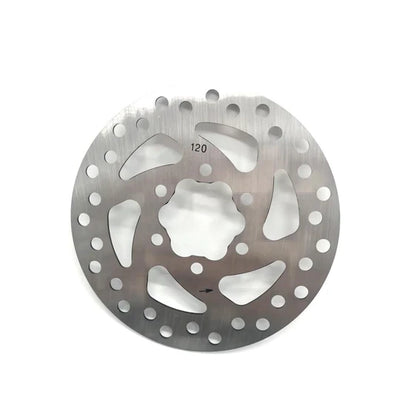
Mechanical disc brakes use a cable to pull brake pads against a rotor. They are reliable and cost-effective.
However, under high-speed riding, cable stretch and friction may reduce responsiveness. Stopping power is decent, but modulation can feel slightly less precise compared to hydraulic systems.
For casual riders, this setup works well. For high-speed performance, it may feel limiting.
Hydraulic Disc Brakes
Hydraulic systems use fluid pressure instead of cables. When the brake lever is pressed, hydraulic fluid transfers force evenly to the calipers.
The result is smoother braking and stronger stopping force. Heat dissipation is also more effective.
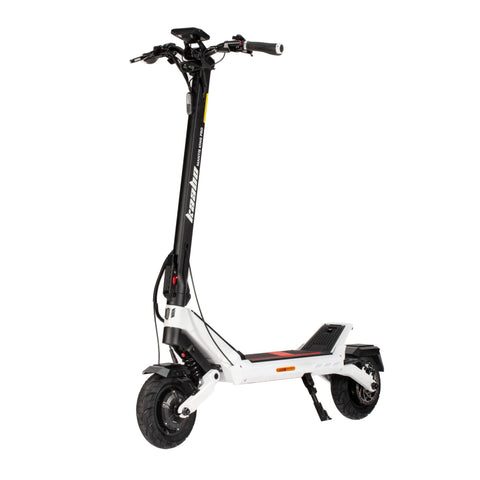
High-end scooters, including models available at https://www.kaabousa.com/, often feature hydraulic systems because they provide better control at speeds above 40 mph.
Hydraulic braking reduces hand fatigue and improves modulation — which means riders can apply gradual pressure instead of sudden stops.
Regenerative Braking
Regenerative braking converts kinetic energy back into battery power while slowing the scooter.
This system is helpful for efficiency and battery range. However, regenerative braking alone is not strong enough for emergency stopping at high speeds.
Instead, it works best when integrated into a combined electric scooter braking system alongside mechanical or hydraulic disc brakes.
Drum Brakes
Drum brakes are enclosed systems that require less maintenance. They perform consistently in wet conditions.
However, they typically offer less stopping power than disc brakes. At higher speeds, they may not provide the same level of control or heat management.
How Heat Affects High-Speed Braking Performance
When braking at high speeds, friction generates heat. Excessive heat can cause brake fade — a condition where braking effectiveness decreases.
According to research published by SAE International, heat buildup is one of the primary causes of reduced braking efficiency in lightweight vehicles.
Hydraulic disc brakes with larger rotors dissipate heat more effectively. Therefore, performance scooters often feature:
-
140mm or 160mm rotors
-
Dual-piston or quad-piston calipers
-
Ventilated rotor designs
These features ensure that the electric scooter braking system maintains consistent stopping power during repeated high-speed use.
Weight Distribution and Stability During Braking
High-speed braking shifts weight toward the front wheel. If the front brake is too aggressive, the rider risks losing rear traction.
An optimized electric scooter braking system balances front and rear braking force. Many advanced scooters use dual disc brakes combined with electronic brake distribution.
This combination allows smoother deceleration and better control.
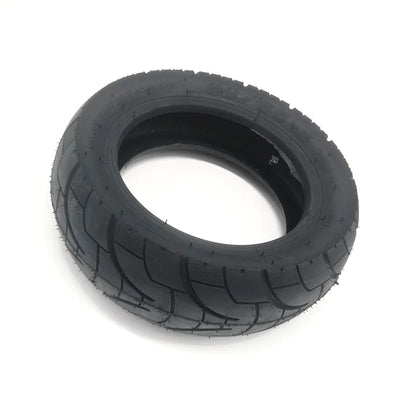
Furthermore, tire grip plays a crucial role. Wide pneumatic tires increase traction, helping braking systems perform more effectively.
ABS and Electronic Brake Assistance
Some high-performance scooters now include electronic braking assistance or eABS systems.
While traditional Anti-lock Braking Systems (ABS) are common in motorcycles, electric scooters typically use simplified electronic modulation.
These systems prevent wheel lock by adjusting motor resistance during regenerative braking.
According to Bloomberg’s urban mobility coverage, micromobility innovation is increasingly focused on safety technology integration. As scooters grow more powerful, electronic braking enhancements are becoming more common.
An advanced electric scooter braking system with electronic modulation offers better high-speed stability, especially in wet conditions.
Comparing Braking Systems for High-Speed Scooters
| Feature | Mechanical Disc | Hydraulic Disc | Regenerative | Drum |
|---|---|---|---|---|
| Stopping Power | Moderate | High | Low (alone) | Moderate |
| Heat Resistance | Moderate | High | Low | Moderate |
| Maintenance | Moderate | Low–Moderate | Very Low | Low |
| High-Speed Control | Good | Excellent | Supportive | Fair |
For riders exceeding 35 mph regularly, hydraulic disc brakes combined with regenerative support provide the best overall performance.
Real-World Riding Scenarios
Imagine riding downhill at 45 mph. A pedestrian suddenly crosses ahead.
With a weak electric scooter braking system, stopping distance increases, wheels may lock, and balance becomes unstable.
With a high-quality hydraulic system:
-
Braking feels controlled
-
Weight shift is manageable
-
Tires maintain grip
-
Stopping distance is reduced
The difference can be several car lengths — which matters greatly in urban traffic.
Maintenance and Its Impact on Braking Performance
Even the best electric scooter braking system fails without proper maintenance.
Brake pads wear over time. Rotors can warp. Hydraulic fluid can absorb moisture.
Experts recommend checking:
-
Pad thickness every 300–500 miles
-
Rotor alignment regularly
-
Brake cable tension (for mechanical systems)
Routine inspection ensures consistent high-speed control.
Suspension and Braking Interaction
Braking does not work alone. Suspension affects stability during deceleration.
When braking hard, front suspension compresses. If suspension is too soft, nose dive increases.
High-performance scooters use adjustable suspension to maintain balance during braking.
A refined electric scooter braking system works in harmony with suspension geometry, ensuring smooth weight transfer and improved rider control.
Wet Weather and Emergency Conditions
Road conditions dramatically influence braking performance.
In wet weather, stopping distance can increase by 30–50%. This makes braking quality even more critical.
Hydraulic systems perform better in moisture due to sealed fluid lines. Meanwhile, regenerative braking adds gradual deceleration without relying entirely on friction.
Riders should always adjust speed based on terrain, even with a high-quality electric scooter braking system.
Why Braking Defines True Performance
Many riders assume speed equals performance. However, control defines performance.
A scooter capable of 60 mph but unable to stop safely lacks balance.
Premium manufacturers prioritize braking upgrades as speed increases. Larger rotors, stronger calipers, and electronic integration reflect this shift.
In fact, advanced braking technology often distinguishes entry-level scooters from high-performance models.
Frequently Asked Questions
How does an electric scooter braking system improve high-speed safety?
An electric scooter braking system improves high-speed safety by reducing stopping distance, preventing wheel lock, and maintaining traction during sudden deceleration.
Are hydraulic brakes better than mechanical brakes for high-speed riding?
Yes. A hydraulic electric scooter braking system delivers stronger and smoother braking force, which improves control at higher speeds.
Does regenerative braking replace disc brakes?
No. Regenerative braking supports the electric scooter braking system but cannot replace mechanical or hydraulic disc brakes for emergency stops.
How often should I service my electric scooter braking system?
You should inspect your electric scooter braking system every few hundred miles and replace worn brake pads promptly to maintain performance.
Can braking systems affect battery life?
Yes. Regenerative components within the electric scooter braking system can slightly extend battery range by converting braking energy back into stored power.
Control Is Everything
Speed excites. Power impresses. But true confidence on a high-performance ride comes from a reliable electric scooter braking system.
From hydraulic discs to regenerative support, braking technology determines how effectively you control momentum. At higher speeds, that control becomes essential.
If you value safety, stability, and responsive handling, always evaluate braking performance before choosing your next scooter. Because when it comes to high-speed riding, stopping power is what truly defines mastery.